by Ali Kennedy | Sep 16, 2026 | Events
Partner Event
September 19, 2026, Maryland, Lagos, Nigeria + Global Livestream
ELEVATE 2026 is the 11th Smart Stewards Summit, helping attendees build a personal 90-day wealth plan through practical workshops and on-site account setup.
by Ali Kennedy | Sep 16, 2026 | Events
Partner Event
October 6-8, 2026, Geneva, Switzerland
Building Bridges 2026 is a three-day sustainable finance summit in Geneva convening financial, public, and international leaders around investable sustainability solutions.

by Ali Kennedy | Sep 9, 2026 | Press Release
The investment supports the company’s next phase of growth while demonstrating TLG’s innovative approach to financing high-quality African businesses, with Cascador playing a key role in structuring the transaction.
9 September, 2026, Lagos – TLG Capital, a leading private credit firm operating across Sub-Saharan Africa, has closed a US$3,000,000 senior debt facility for Drive45 Mobility Limited (“Drive45”), a Lagos-based transportation company providing mobility solutions to international and local businesses across Nigeria. The investment strengthens Drive45’s balance sheet and positions the company for its next phase of growth as demand for mobility services continues to increase across the country.
Founded in 2021, Drive45 has built a focused business aimed at closing Nigeria’s mobility gap, giving international and local businesses access to reliable transportation without the capital burden of vehicle ownership. Today, the company operates more than 170 active vehicles and has recorded no payment defaults in five years of operation.
The facility will support Drive45’s continued expansion, enabling the company to deploy more capital into fleet growth, broaden its customer base, and deepen its presence across Nigeria. In the coming years, it aims to increase its footprint to Port Harcourt, Abuja, Kano, Kaduna and other major business hubs across Nigeria.
The transaction combines TLG’s flexible private credit with a guarantee provided by Cascador, delivered in partnership with Morgan Stanley. Through this innovative partnership, high-growth African businesses like Drive45 can access the institutional capital suited to their growth. Cascador has delivered financial and non-financial resources to the company since Drive45 completed Cascador’s ScaleUp programme in 2024, and this transaction sees Cascador extend that support, this time through a creative financing mechanism.
Isha Doshi, Co-Founder and Partner at TLG Capital, said:
“Drive45 is a prime example of disciplined capital deployment to meet a clear market need. Oluwaseyi and his team have a very clear vision for what mobility can look like in Nigeria’s business community – and they have built a fantastic business around it. TLG is proud to support Drive45 in its expansion journey. This transaction also would not have been possible without Cascador. It’s easy to see how they’ve built an exceptional track record in Nigeria: they combine seasoned experience in the market with a relentless bias towards action. This is exactly the type of partner we look to grow with.”
Oluwaseyi Adefemi, CEO of Drive45, said:
“Mobility access is a capital business, so having the right financial backing is everything. TLG has been a thoughtful partner from day one. They took the time to understand how our business works and structured their capital to fit the growth trajectory we know is possible. Ultimately, their money goes directly towards our plans to reach more businesses across Nigeria. Just as important has been Cascador. They believed in Drive45 from our earliest days, gave us the tools and network to become investment-ready, and have worked alongside us every step of the way to help structure this financing. We’re grateful to have them as long-term partners as we keep scaling,”
Trish Thomas, CEO of Cascador, said:
“So many investors focus on getting capital out the door without thinking about setting companies up for long-term viability. TLG is an exception: not only are they commercially-minded, but they have a unique drive to get things done with speed, imagination, and excellence. Funders looking for true economic impact in Africa should look to TLG as an execution-focused financing partner. This partnership is perfect for a company like Drive45. Oluwaseyi and his team have built a business with real corporate demand and the integrity to match it. That’s exactly what Cascador exists to find, and it’s been a privilege watching them grow into a business ready for commercial capital. We’re thrilled to have played a part in getting them here, and we’re always looking for opportunities to elevate high-performing founders leading sustainable, impactful companies.”
TLG will continue to work closely with Drive45 following the investment through its value creation framework, partnering with management to strengthen governance, ESG monitoring, operational performance and strategic growth initiatives as the business continues to scale.
The Drive45 team was led by Oluwaseyi Adefemi. The TLG Capital deal team comprised Aum Thacker and Rohan Subramanian. Legal counsel for the transaction were Simon Harter, Hannaford Turner, and Wigwe and Partners. Cascador supported the transaction as guarantor and Drive45’s accelerator partner.
About TLG Capital
TLG Capital is a leading private credit fund manager exclusively focused on sub-Saharan Africa. TLG has made 50+ investments and 30+ exits across 20+ African countries since its inception in 2012. TLG’s flagship fund, Africa Growth Impact Fund II (AGIF II), targets small-and-medium enterprises and is anchored by the IFC, Norfund, Swedfund, and Bpifrance. TLG is trusted by more than 100 institutional and individual investors across North America, Europe, Asia, and Africa. For more information, visit www.tlgcapital.com.
About Drive45
Drive45 Mobility is a Nigerian mobility company transforming access to vehicle ownership through a flexible rent-to-own vehicle subscription model. We enable individuals and businesses to access vehicles with manageable payments and minimal upfront capital. Our offering combines vehicle financing with insurance, maintenance, tracking, documentation, and fleet management. Drive45 is building a scalable pathway to affordable mobility and vehicle ownership across Africa. Learn more at www.drive45mobility.com.
About Cascador
Cascador is a Nigeria-focused platform for growth-stage founders, powered by the Empowering Economic Growth Foundation (EEGF), a US-based private operating foundation dedicated to strengthening Africa’s entrepreneurial ecosystem. Since launching in 2019, Cascador has supported more than 70 ventures, which have collectively raised over $125 million in capital and created tens of thousands of jobs. Through its ScaleUp Programme and Catalytic Fund, a $5+ million annual financing vehicle launched 2025, Cascador equips growth-stage founders with mentorship, strategic advisory support, and access to debt, equity and credit guarantees. Learn more and apply at www.cascador.org.

by Ali Kennedy | Sep 2, 2026 | News
By Chimgozirim Nwokoma
Cascador selects 10 growth-stage Nigerian businesses for its latest Scale Up cohort, with a focus on capital readiness and sustainable growth.
Ten growth-stage businesses have joined Cascador’s latest Scale Up cohort, as the business support platform continues to focus on helping established Nigerian companies overcome the challenges of scaling.
Cascador’s 12-week programme provides selected businesses with training and support across key areas of growth, with participating companies also given the opportunity to pitch for a share of $50,000 in prizes.
The latest cohort was selected from more than 1,000 applications received by Cascador this year.
The selected businesses operate across sectors, including agriculture, wellness, real estate and energy. The cohort also includes technology-enabled businesses such as Venco, SunFi, EHA Clinics and Beauty Hut Africa.
For Cascador CEO Trish Thomas, the organisation’s decision to focus specifically on growth-stage businesses is driven by the financing gap facing companies across Africa.
While startups often attract significant attention from investors, businesses that have already demonstrated demand and are looking to scale can still struggle to access the right type of capital.
Thomas says this financing challenge has also influenced how Cascador has evolved its programme. In recent years, the organisation has placed greater emphasis on preparing businesses to become capital-ready, rather than focusing solely on improving their underlying business fundamentals.
“The biggest shift for Cascador in recent years has been a significant focus on capital readiness and not just business fundamentals,” Thomas said.
That focus has extended beyond training. Cascador has established a Catalytic Fund in partnership with Sterling Bank to provide debt financing to qualifying businesses.
According to Thomas, the fund was developed after months of research and conversations with companies Cascador had previously supported. Some of those businesses had gone on to raise debt financing but found that the structure and cost of that capital created additional pressure as they expanded.
“They were put in a position where even though their companies were scaling in local currency, they were really negatively impacted by the debt servicing requirements,” she said.
The financing challenge is particularly important for growth-stage companies, which may require significantly more capital than they did in their early years but may not yet have access to the funding options available to larger businesses.
Beyond access to capital, Cascador is also looking for entrepreneurs who can translate the lessons from the programme into sustainable growth.
While the businesses in the latest cohort span different industries, Thomas notes that the common thread is the founders’ ability to think strategically and apply what they learn to their companies.
The organisation also considers the broader impact of the businesses it supports, including their contribution to job creation and sustainability goals.
Inclusion remains another focus for the programme. Women-led businesses account for 60% of the latest cohort, highlighting Cascador’s efforts to increase the representation of women entrepreneurs within its programmes.
“The next chapter of Nigeria’s entrepreneurial story will be about what happens when proven businesses get the support they need to scale,” said David DeLucia, co-founder of Cascador. “That is the opportunity this cohort brings, where visionaries, innovators and impact-driven leaders can grow their businesses sustainably with lasting economic value.”
Condia Article

by Ali Kennedy | Sep 2, 2026 | News
By Royal Ibeh
Cascador has selected 10 Nigerian growth-stage companies for its 2026 ScaleUp Programme, signalling a growing shift in Nigeria’s entrepreneurial ecosystem towards businesses solving problems in healthcare, agriculture, energy, manufacturing and other parts of the real economy.
The companies were selected from more than 1,000 qualified applications for the 12-week programme, which begins this month. Cascador said the number of qualified applications more than doubled from 2025, suggesting a growing pool of Nigerian businesses that have moved beyond the startup phase and are seeking support to scale.
The selected companies are Venco, SunFi, ColdHubs, EHA Clinics, Beauty Hut Africa, BEYOND Fitness, Ziba Beach Resort, Tulay Africa, Maanj Agric and Finger Chops.
Read also: Where are the banks, the businesses and the buildings owned by women?
Unlike many African startup programmes that concentrate heavily on fintech and technology businesses, the new cohort spans clean energy, food production, healthcare, agriculture, tourism, minerals, wellness, beauty and property technology.
Business Day Article
by Ali Kennedy | Sep 2, 2026 | Press Release
Companies span diverse sectors, creating jobs, and driving growth across Nigeria
2 September, 2026, Lagos – Cascador, a Nigeria-focused platform that unlocks the potential of the region’s most transformative entrepreneurs, today announces its new cohort as it kicks off the 12-week 2026 ScaleUp Program. The 10 selected Nigerian growth-stage companies represent an elite class of businesses that are driving healthcare access, food security, clean energy, and job creation across the country.
Chosen from more than 1,000 qualified applications, this cohort reflects Cascador’s strategic shift toward ambitious growth-stage businesses poised for scale, with proven traction from Nigeria’s real economy and tech-driven industries.
The 10 companies are:
- Venco – Bringing payments, utilities, communications and operations for multi-tenanted communities onto one digital platform.
- SunFi – Powering solar adoption through a digital platform for financing, distribution, installation and management of clean-energy products and services.
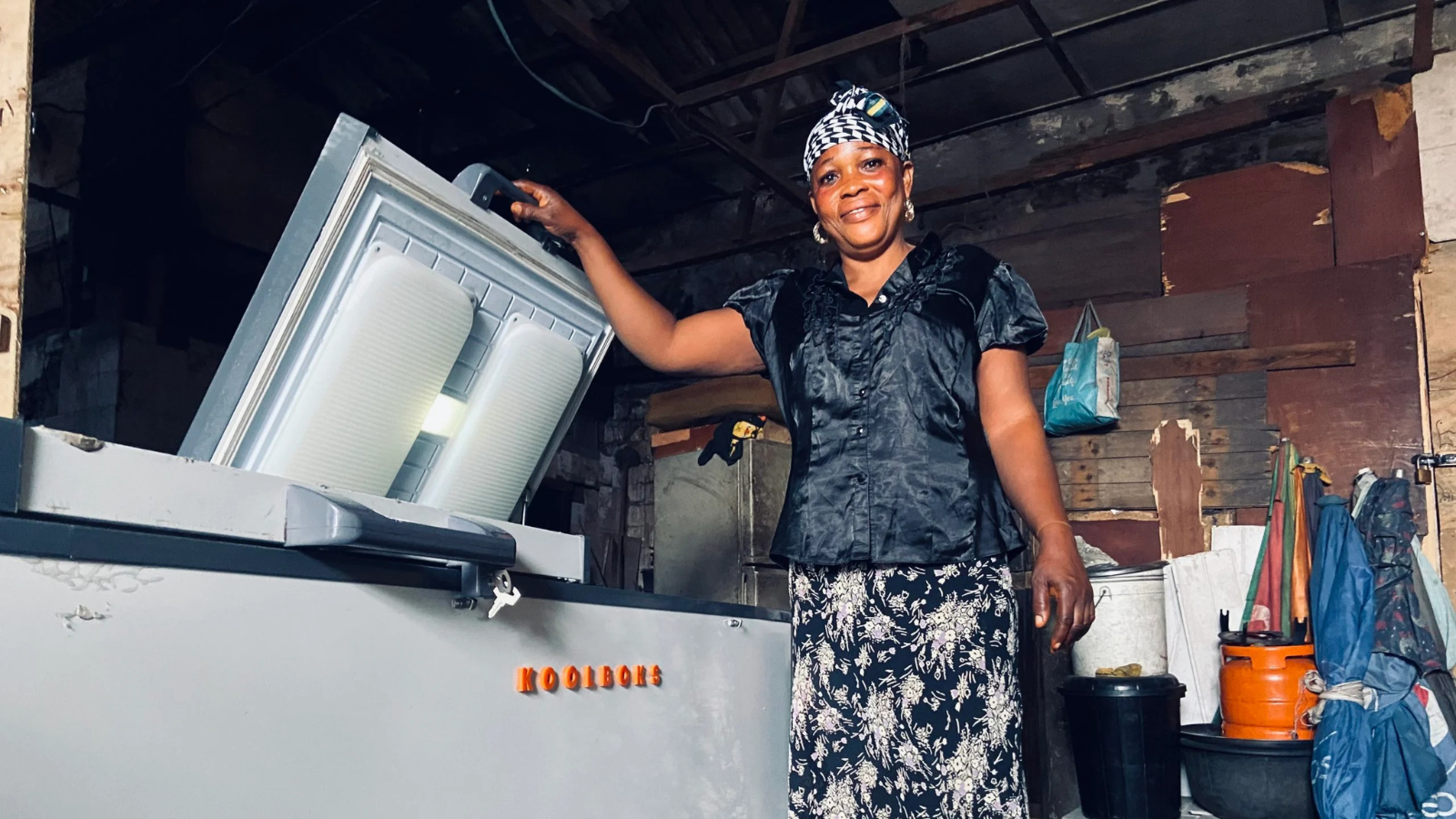
- ColdHubs – Helping farmers, traders and food businesses reduce post-harvest losses through solar-powered cold storage.
- EHA Clinics – Expanding access to comprehensive primary healthcare through integrated digital, pharmacy and home-care services.
- Beauty Hut Africa – Building Africa’s beauty commerce infrastructure through technology-enabled retail and distribution of local and global beauty products.
- BEYOND Fitness – Combining fitness, recovery and community to create premium wellness experiences for professionals and teams.
- Ziba Beach Resort – Building experience-led leisure destinations that unlock the potential of Nigeria’s domestic tourism market.
- Tulay Africa – Connecting global industrial buyers with African producers to build a reliable supply of export-grade critical minerals.
- Maanj Agric – Connecting smallholder farmers to financing, climate-smart inputs, storage and markets through a coordinated farming network.
- Finger Chops – Producing and distributing high-quality bread at scale to households, retailers and institutions across Nigeria.
“We’re incredibly proud to be part of Cascador’s 2026 ScaleUp Program. The mentorship, resources and networks the program provides will accelerate our growth to transform how residential and commercial communities operate across Africa. As we scale, our goal is to bring our secure and efficient technology platform to more communities across new cities and countries, giving the managers who run them better tools to serve their residents,” said Chude Osiegbu, CEO and Co-Founder of Venco”
With 60% of businesses in this year’s cohort led by women and founders from 5 out of 6 regions across Nigeria, the cohort brings together a diverse range of perspectives, experiences and market knowledge. The diversity of the cohort, combined with the depth of Cascador’s influential network of faculty, mentors and advisors, creates opportunities to foster new partnerships, broaden networks, expand market access and unlock growth beyond their individual businesses.
“The founders in our 2026 ScaleUp program reflect the ambition, resilience and entrepreneurial talent driving Nigeria’s economy forward. Their businesses are already creating jobs, generating value and spurring growth across some of the country’s most important sectors. Our focus now is helping them scale further and unlock their full potential, giving them the training, mentorship, networks and leadership skills needed to power their next phase of growth,” said Trish Thomas, CEO of Cascador.
The 2026 ScaleUp Program will include:
- Bespoke 1:1 support from investors, African and international experts, and strategic partners
- Eligibility for follow-on funding through Cascador’s Catalytic Fund, which deploys up to $5 million annually in growth capital through local currency debt, equity, and guarantees in partnership with Sterling Bank.
- 12-week program: 2 weeks of in-person sessions, including the program kickoff and pitch week, packaged with 10 weeks of virtual sessions for founders and their leadership teams
- Live Pitch Day, for the chance to be awarded $50k USD in prizes
“Finger Chops has been able to grow from a catering service into a trusted full-scale bakery serving communities and businesses. But our vision does not stop there; we want to build a leading African food manufacturing company rooted in quality, locally sourced products and operational excellence. Being selected for Cascador’s 2026 ScaleUp Program brings us closer to making that vision a reality, and we look forward to all the opportunities it brings,” said Adenike (Oyebola) Fetuga, CEO of Finger Chops.
Since 2019, Cascador has supported 70 ventures that have collectively raised $125 million in capital. In 2025 alone, Cascador’s alumni delivered essential products and services to more than 1.7 million customers.
“The next chapter of Nigeria’s entrepreneurial story will be about what happens when proven businesses get the support they need to scale. That is the opportunity this cohort brings, where visionaries, innovators and impact-driven leaders can grow their businesses sustainably with lasting economic value,” said David DeLucia, Co-Founder of Cascador.
You can register to be notified when applications open for Cascador’s next cohort here.
– ENDS –
About Cascador
Cascador is a Nigeria-focused platform for growth-stage founders building businesses that make an impact. Through Cascador ScaleUp, its flagship program, Cascador works with an elite cohort of entrepreneurs to strengthen their leadership and sharpen their strategy, preparing them to scale successfully. ScaleUp alumni gain exclusive access to the Catalytic Fund, which deploys up to $5M USD in capital annually through a blend of debt and equity investments. Since 2019, Cascador has supported 70 companies that have collectively raised over $125 million. Today, alumni are driving innovation, creating jobs, raising investment capital, winning awards, and changing the face of the African economy. Learn more at www.cascador.org

by Ali Kennedy | Aug 14, 2026 | Press Release
Announced in celebration of International Youth Day 2026, the program will award top-performing founders up to ₦5 million in non-dilutive funding
14 August 2026, Abuja – The Federal Ministry of Youth Development (FMYD), through the Nigerian Youth Academy (NiYA), today announced a new partnership with Cascador, a Nigeria-focused platform for growth-stage founders, to fund and support the next generation of Nigerian youth entrepreneurs. The announcement coincides with International Youth Day 2026, whose global theme this year — “Different Contexts, Common Aspirations” — calls on institutions to close the gap between young people’s circumstances and their opportunities.
The NiYA × Cascador Founders Program will run as a pilot cohort of 20 early-stage Nigerian youth founders, many without formal business registration or a financial track record. Over an intensive four-week curriculum, they’ll develop business fundamentals, investment readiness, and pitch preparation. At the program’s close, the eight top-performing founders will receive non-dilutive funding of up to ₦5 million each from Cascador, along with an Enterprise Resource Planning (ERP) solution to help structure, manage, and scale their business operations, at a NiYA/FMYD-organised Pitch Day.
The pilot is an early step toward NiYA’s broader ambition to train and empower 7 million Nigerian youth within two years.
“For NiYA, training is only one part of the journey. The real value is in helping young people move from learning to enterprise, from ideas to investable businesses, and from potential to sustainable economic participation. The partnership with Cascador strengthens that pathway by combining business preparation with access to capital, particularly for young founders who may not yet have the formal structures or financial history that traditional funding often requires,” the Minister said.
The program pairs NiYA and FMYD’s reach into Nigeria’s youth ecosystem with Cascador’s experience preparing founders for capital. NiYA and FMYD manage sourcing, training, and day-to-day delivery; Cascador helps define eligibility criteria, supports the cohort’s investment readiness, judges the participants’ pitches, and funds the program’s top performers.
“NiYA and FMYD have already shown what real commitment to Nigeria’s youth looks like — the platforms, the reach, the ambition to train millions. What we’re building together now is the missing piece, a practical bridge from the ideation stage to real capital-readiness. When a Ministry so dedicated to its young people asked Cascador to help build that bridge, it was an easy decision,” said Trish Thomas, CEO of Cascador.
Oyin Solebo, COO of Cascador and former Managing Director of the ARM Labs Lagos Techstars Accelerator, highlighted the partnership’s impact, saying, “This is what innovative capital deployment looks like: a government building real investment readiness at scale, and a partner meeting that foundational work with non-dilutive funding at exactly the moment it’s needed. Partnerships like this open doors that neither of us could open alone.”
“The Minister for Youth also speaks on what the pilot represents, stating, “The pilot is deliberately designed to test a model that can go beyond one cohort. If young founders can be identified early, prepared properly, connected to credible capital and supported to build stronger business systems, then access to opportunity becomes less dependent on background or existing networks. That is the larger objective: to build a youth entrepreneurship ecosystem in which readiness, ideas and execution can increasingly determine who gets the opportunity to grow.”
The pilot will run in-person in Abuja with virtual touchpoints and 1:1 mentorship. All 20 graduates retain NiYA alumni status, with priority consideration for future opportunities.
Applications will open on Wednesday 19th August 2026. Interested youth entrepreneurs can visit www.niya.gov.ng to learn more and apply.
– ENDS –
About the Federal Ministry of Youth Development (FMYD) and NiYA
The Federal Ministry of Youth Development (FMYD) is the Federal Government of Nigeria’s institution responsible for providing strategic leadership and a sustainable framework for policies, programmes, and initiatives that empower young Nigerians and enhance their participation in national development. The Ministry works with government institutions, private-sector organisations, development partners, and other stakeholders to expand opportunities for youth in areas including skills development, entrepreneurship, employment, innovation, digital transformation, leadership, and economic participation.
The Nigerian Youth Academy (NiYA) is a flagship digital platform of the Federal Ministry of Youth Development designed to provide Nigerian youth with access to learning, skills development, opportunities, resources, and programmes that support their personal and professional growth. Through a digital-first approach, NiYA seeks to connect young Nigerians to relevant training, entrepreneurship support, career opportunities, grants, mentorship, and other interventions, creating a more accessible and coordinated ecosystem for youth development.
Together, FMYD and NiYA are advancing a more connected, empowered, and opportunity-driven generation of Nigerian youth, equipping them with the knowledge, skills, networks, and opportunities required to contribute meaningfully to Nigeria’s socio-economic development.
About Cascador
Cascador is a Nigeria-focused platform for growth-stage founders building businesses that make an impact. Through Cascador ScaleUp, its flagship program, Cascador works with an elite cohort of entrepreneurs to strengthen their leadership and sharpen their strategy, preparing them to scale successfully. ScaleUp alumni gain exclusive access to the Catalytic Fund, which deploys up to $5M USD in capital annually through a blend of debt and equity investments. Since 2019, Cascador has supported 70 companies that have collectively raised over $125 million. Today, alumni are driving innovation, creating jobs, raising investment capital, winning awards, and changing the face of the African economy. Learn more at www.cascador.org
by Ali Kennedy | Aug 14, 2026 | News
By Opeyemi Kareem
14th Aug, 2026
Cascador, a Nigeria-focused platform for growth-stage founders, has partnered with the Federal Ministry of Youth Development (FMYD) through the Nigerian Youth Academy (NiYA), a federal digital empowerment platform, to launch a programme to help youth entrepreneurs build stronger businesses.
The NiYA × Cascador Founders Program will begin with a pilot cohort of 20 early-stage Nigerian founders, eight of whom will receive up to ₦5 million ($3,600) each in non-dilutive funding at the end of the programme. Applications for the program will open on August 19, and interested participants can apply on the NiYA website.
The programme adds to the Nigerian government’s efforts in supporting young entrepreneurs and early-stage businesses. In November 2025, the government’s Investment in Digital and Creative Enterprises (iDICE) programme invested in Ventures Platform’s $64 million first close of its Pan-African fund II.
“For NiYA, training is only one part of the journey. The real value is in helping young people move from learning to enterprise, from ideas to investable businesses, and from potential to sustainable economic participation,” said Ayodele Olawande, Minister of Youth Development. “The partnership with Cascador strengthens that pathway by combining business preparation with access to capital, particularly for young founders who may not yet have the formal structures or financial history that traditional funding often requires.”
The program will run for four weeks and cover business fundamentals, investment readiness and pitch preparation, according to the company. It will be delivered in person in Abuja, Nigeria’s capital city, and include virtual touchpoints and one-on-one mentorship.
After completion, the eight top-performing founders will receive an Enterprise Resource Planning (ERP) solution designed to help them organise and manage their businesses in addition to the funding at a NiYA/FMYD-organised Pitch Day. The funding is non-dilutive, meaning the founders will not have to give up equity in their businesses in exchange for the capital.
“NiYA and FMYD have already shown what real commitment to Nigeria’s youth looks like — the platforms, the reach, the ambition to train millions,” said Trish Thomas, CEO of Cascador. “What we’re building together now is the missing piece, a practical bridge from the ideation stage to real capital-readiness. When a Ministry so dedicated to its young people asked Cascador to help build that bridge, it was an easy decision.”
Over the course of the program, NiYA and FMYD will handle founder sourcing, training and the day-to-day delivery of the programme, while Cascador will help define eligibility criteria, support investment-readiness training, judge the founders’ pitches and provide the funding for the top performers.
The pilot is part of NiYA’s ambition to train and empower seven million Nigerian youth within two years. All 20 founders who complete the program retain NiYA alumni status and receive priority consideration for future opportunities, according to the academy.
The program builds on Cascador’s existing work supporting Nigerian founders, including through the Cascador ScaleUp, a program for growth-stage entrepreneurs focused on leadership and strategy. Its ScaleUp alumni gain access to the Cascador Catalytic Fund, which the company said deploys up to $5 million annually through a combination of debt and equity investments.
Since 2019, Cascador said it has supported 70 companies that have collectively raised more than $125 million.
Link to TechCabal Article

by Ali Kennedy | Aug 10, 2026 | Press Release
Lagos, Nigeria – August 4, 2026 — EHA Impact Ventures (EIV) and Cascador convened founders, investors, healthcare leaders, and ecosystem stakeholders for the Health Founders’ Table, an intimate gathering designed to foster honest conversations about the realities of building health-focused ventures in Africa.
The event brought together entrepreneurs working across healthcare delivery, health technology, and nutrition to explore some of the most pressing challenges facing founders today. Discussions focused on access to capital, talent retention, regulatory readiness, market access, and building sustainable businesses capable of delivering long-term impact.
Unlike traditional conferences, the Health Founders’ Table was intentionally designed as a space for candid dialogue and practical problem-solving. Participants engaged directly with industry leaders and peers to exchange experiences, lessons learned, and actionable strategies.
“Building a business can be isolating. Building a health business can be even more so,” said Adam Thompson, Co-Founder of EHA Impact Ventures and CEO of EHA Group. “The solutions to many of these challenges already exist within the ecosystem; founders simply need opportunities to learn from one another.”
Among the key themes that emerged was the changing landscape for startup financing. Founders discussed the realities of operating in a more concentrated funding environment and explored alternative pathways to growth, including revenue-based expansion, strategic partnerships, grants, customer contracts, and local financing mechanisms.
The conversation also tackled one of the most pressing realities facing businesses across the continent: talent migration, commonly known as “japa.” During the session on managing talent exodus, Ijeoma Anunibe, Group Head of Human Resources at African Capital Alliance, challenged founders to rethink their approach to talent retention and continuity planning.
“People leave. That’s not failure. It’s a fact. Plan around it,” she said. Participants explored practical approaches to retaining critical talent, maintaining relationships with professionals who relocate, and designing organizations that can continue to thrive despite workforce disruptions.
Market access proved just as central to the day’s conversations. Unoma Grant, Executive Director and COO of Paelon Memorial Hospital, described how a hospital’s decision to work with a founder has to clear four separate tests at once — clinical, operational, financial, and governance — before a single “yes” translates into real market access. Her sharpest note was on why founders stall at this stage: “A pilot without a defined decision, a named data owner, and a set end date is not a pilot. It is unpaid research that happens to run inside a hospital.” Without that discipline, a pilot can run for months without ever converting into the access it was meant to test.
Reflecting on the discussions, Kudzayi Hove, CEO/Co-Founder of Amayi Foods, noted: “One thing that stood out to me was how grounded in reality the sessions were, especially when we were exploring different funding pathways for our businesses.”
Speaking on the importance of the gathering, Amanda Etuk, Program Director at Cascador, said: “Founders often face similar challenges in isolation. By creating opportunities for shared learning and collaboration, EHA Impact Ventures and Cascador are helping strengthen the ecosystem supporting entrepreneurs working to improve health outcomes across Africa.”
The event reinforced a central message: while access to capital remains important, sustainable growth depends equally on trust, market access, talent, and strong partnerships.
EHA Impact Ventures and Cascador continue their mission of supporting founders building solutions in Africa and creating spaces where entrepreneurs can access not only funding, but also the networks, knowledge, and strategic support needed to grow their impact.
About EHA Impact Ventures
EHA Impact Ventures (EIV) is a gender-lens impact investing firm under The EHA Group, backing women-led businesses building innovative health, nutrition, and livelihoods solutions across Africa. Through flexible capital, strategic support, and access to networks, EIV helps founders scale businesses that create measurable social impact while building sustainable enterprises.To learn more, visit https://www.eha.ventures/
Media Contact: Sumayyah Ibrahim | Email: sumayyah.ibrahim@eha.ventures
Investor Contact: Evelyn Castle | Email: evelyn@eha.ventures
About Cascador
Cascador is a Nigeria-focused platform for growth-stage founders building businesses that make an impact. Through Cascador ScaleUp, its flagship program, Cascador works with an elite cohort of entrepreneurs to strengthen their leadership and sharpen their strategy, preparing them to scale successfully. ScaleUp alumni gain exclusive access to the Catalytic Fund, which deploys up to $5M USD in capital annually through a blend of debt and equity investments. Since 2019, Cascador has supported 70 companies that have collectively raised over $125 million. Today, alumni are driving innovation, creating jobs, raising investment capital, winning awards, and changing the face of the African economy.
Learn more at www.cascador.org
Media Contact: cascador@wimbart.com

by Ali Kennedy | Jul 27, 2026 | News, Podcast
July 27, 2026, Podcast | Hosted by Terser Adamu
https://www.buzzsprout.com/1901592/episodes/19550629
Show Notes
Episode 231 with Amanda Etuk, Program Director at Cascador, an Africa focused platform supporting growth stage entrepreneurs with the leadership, networks, strategic partnerships and catalytic capital needed to build resilient, high impact businesses.
Amanda works at the intersection of strategy and execution, helping founders navigate one of the most overlooked stages of African entrepreneurship. With experience spanning scaling startups, managing complex multimillion pound operations and building ecosystem partnerships, she is focused on equipping entrepreneurs with the tools they need to grow sustainable businesses that create jobs and strengthen Africa’s economy. Through Cascador, she works closely with founders who have moved beyond the startup phase but need the right support to successfully scale their businesses.
In this episode, Amanda explains why Africa’s biggest entrepreneurial opportunity lies not in creating more startups, but in helping existing African businesses successfully navigate the “messy middle”. She explores why growth stage founders are often overlooked despite their importance to job creation and economic development, why leadership and strong networks matter just as much as access to finance, and why Africa needs new models of support that extend beyond traditional venture capital to build resilient, globally competitive businesses and strengthen the real economy.
What We Discuss With Amanda
- Why the “messy middle” is one of the biggest and most overlooked opportunities in Africa’s entrepreneurial ecosystem.
- Why growth stage businesses are critical to creating jobs and driving long term economic growth across Africa.
- Why leadership development, mentorship and strong peer networks can be just as valuable as raising capital.
- Why Africa needs financing and support models that go beyond venture capital to better serve the real economy.
- What founders, investors, policymakers and ecosystem builders need to do differently to help more African businesses scale into resilient, globally competitive companies.
Did you miss my previous episode where I discuss Why Africa’s Music Industry Isn’t Getting Paid What It’s Owed? Make sure to check it out!
Connect with Terser:
LinkedIn – Terser Adamu
Instagram – unlockingafrica
Twitter (X) – @TerserAdamu
Connect with Amanda
LinkedIn – Amanda Etuk and Cascador
Many of the businesses unlocking opportunities in Africa don’t do it alone. If you’d like strategic support on entering or expanding across African markets, reach out to our partners ETK Group:
www.etkgroup.co.uk
info@etkgroup.co.uk
Unlocking Africa