The Lagos-based accelerator, Cascador, in collaboration with Nigerian commercial bank Sterling Bank, has launched a $200 million SME Credit Backstop Fund to help Nigerian small businesses get larger, longer loans.
The fund will share credit risk with lenders. Cascador says the model can support up to $1 billion in outstanding credit capacity.
It targets debt-ready businesses that are struggling to access debt. They can first get local currency loans worth $250,000, and the fund aims to unlock loans of up to $1 million once it is fully funded.
“By sharing risk with lenders and translating community trust into a bankable signal to lend, the fund can help more businesses access what they need to scale and create jobs,” said Trish Thomas, CEO of Cascador.
The backstop capital is meant to come from philanthropic funders, impact investors and development finance institutions.
The launch follows Cascador’s white paper, The Multiplier Model. Cascador says only 22% of businesses in Sub-Saharan Africa hold a bank loan or credit line below the global average of 36%.
Obinna Ukachukwu, Group Executive at Sterling Bank, said the fund brings together businesses recommended by venture funds and studios that know them.
“This combines a stronger borrower pipeline with structured assessment and ongoing monitoring, giving us greater confidence to provide larger, longer-term loans,” he said.
The fund will run through Riverwell Platform Holding Limited, which Cascador describes as UK-owned, and Riverwell Platform Services Nigeria. The reserve capital will be held separately. Ukachukwu will serve as a director on the Riverwell platform.
The model builds on the Catalytic Fund that Cascador and Sterling piloted. Cascador says it has supported 80 ventures since 2019 and that it has raised over $150 million.
Cascador, a Nigeria-focused platform for growth-stage founders, and Sterling Bank, a mid-size Nigerian commercial bank, have set up a $200 million fund to help small Nigerian businesses and startups get bank loans by sharing the risk of borrowers defaulting.
The partners say the SME Credit Backstop can back up to $1 billion in loans at a time. Rather than directly lending to the businesses, it will guarantee part of the bank’s potential losses if a borrower defaults, making it easier for lenders to extend credit to companies they might otherwise consider risky.
The fund will consider businesses nominated by venture capital firms and studios that already back them. It will use AI-powered underwriting to check whether the business is ready to take on debt. If it approves the business, the fund agrees to cover part of the bank’s loss if that loan goes bad.
The fund targets a persistent obstacle for most Nigerian startups: access to debt. About one in five Nigerian businesses had a bank loan or line of credit in 2025, compared with 22% across Sub-Saharan Africa and 36% globally, according to World Bank Enterprise Survey data. Banks often consider small businesses and startups as risky and demand collateral that many cannot provide.
“By sharing risk with lenders and translating community trust into a bankable signal to lend, the fund can help more businesses access what they need to scale and create jobs,” said Trish Thomas, Cascador’s CEO, in a statement shared with TechCabal.
Sterling will decide whether to lend after conducting its own checks. The bank will disburse approved loans, collect repayments and pursue borrowers who default. The backstop is intended to reduce the bank’s exposure, not eliminate it.
Obinna Ukachukwu, a group executive at Sterling Bank, said the backstop, combined with borrowers recommended by funds that already know them, gives the bank “greater confidence to provide larger, longer-term loans.”
Borrowers can start with local-currency loans worth up to $250,000, and the fund plans to raise that to $1 million.
The partners expect to raise the backstop capital from philanthropic funders, impact investors and development finance institutions. The $200 million is therefore the fund’s stated size, while the $1 billion figure represents the lending capacity it aims to support.
“The future cannot be sustainably built on one layer of the capital stack,” said Iyinoluwa Aboyeji, founding partner of Future Africa, in the statement. “Equity must work with debt and long-term securities to provide builders with the capital they need to build the future.”
Without access to loans, startups must rely more heavily on equity financing to expand, giving investors ownership stakes in exchange for capital. But venture funding has become harder to secure. Only 190 African startups raised $100,000 or more in the first half of 2026, the lowest number since at least 2021. Companies unable to borrow either give up more ownership and control at the early stage or grow slowly.
Debt has become a larger part of African startup financing, although it remains concentrated among a relatively small group of companies. Startups on the continent borrowed a record $1.64 billion in 2025, and debt made up 41% of all their funding, up from 17% in 2019. TechCabal Insights tracked another $614 million in startup debt in the first half of 2026, about 43% of all funding. Over five years, 169 African startups announced debt deals, against nearly 1,900 that raised equity.
The new fund is designed to widen access by letting lenders share the risk of lending to businesses with revenue and existing investors willing to vouch for them. The move also builds on an earlier partnership between Cascador and Sterling. In 2025, they partnered on a $2 million catalytic fund that gave Cascador alumni debt at interest rates around 20%, with much lower collateral requirements. At its June 2026 Pitch Day, the fund handed out more than $5 million, including a ₦2.5 billion ($1.7 million) debt facility to Agriarche, an agritech startup.
The new fund expands that model beyond Cascador’s alumni. Under the earlier arrangement, Cascador nominated and guaranteed borrowers while Sterling provided the loans. The SME Credit Backstop Fund will also accept nominations from other venture capital firms and startup studios.
The fund will operate through Riverwell Platform Holding Limited, a UK-owned company, and Riverwell Platform Services Nigeria, a Nigerian operating company. The Nigerian company will handle partner coordination, borrower assessment, data collection, and portfolio monitoring. A separate reserve company will hold the backstop capital. Ukachukwu will serve as a director on the Riverwell platform.
True scale demands moving beyond surface-level integrations to robust execution. We’ve filtered the noise out of Moonshot 2026, optimising the conference strictly for high-calibre connections between startup founders, global financial operators, enterprise leaders and individuals rewiring Africa’s technical frameworks.
Cascador selects 10 growth-stage Nigerian businesses for its latest Scale Up cohort, with a focus on capital readiness and sustainable growth.
Ten growth-stage businesses have joined Cascador’s latest Scale Up cohort, as the business support platform continues to focus on helping established Nigerian companies overcome the challenges of scaling.
Cascador’s 12-week programme provides selected businesses with training and support across key areas of growth, with participating companies also given the opportunity to pitch for a share of $50,000 in prizes.
The latest cohort was selected from more than 1,000 applications received by Cascador this year.
The selected businesses operate across sectors, including agriculture, wellness, real estate and energy. The cohort also includes technology-enabled businesses such as Venco, SunFi, EHA Clinics and Beauty Hut Africa.
For Cascador CEO Trish Thomas, the organisation’s decision to focus specifically on growth-stage businesses is driven by the financing gap facing companies across Africa.
While startups often attract significant attention from investors, businesses that have already demonstrated demand and are looking to scale can still struggle to access the right type of capital.
Thomas says this financing challenge has also influenced how Cascador has evolved its programme. In recent years, the organisation has placed greater emphasis on preparing businesses to become capital-ready, rather than focusing solely on improving their underlying business fundamentals.
“The biggest shift for Cascador in recent years has been a significant focus on capital readiness and not just business fundamentals,” Thomas said.
That focus has extended beyond training. Cascador has established a Catalytic Fund in partnership with Sterling Bank to provide debt financing to qualifying businesses.
According to Thomas, the fund was developed after months of research and conversations with companies Cascador had previously supported. Some of those businesses had gone on to raise debt financing but found that the structure and cost of that capital created additional pressure as they expanded.
“They were put in a position where even though their companies were scaling in local currency, they were really negatively impacted by the debt servicing requirements,” she said.
The financing challenge is particularly important for growth-stage companies, which may require significantly more capital than they did in their early years but may not yet have access to the funding options available to larger businesses.
Beyond access to capital, Cascador is also looking for entrepreneurs who can translate the lessons from the programme into sustainable growth.
While the businesses in the latest cohort span different industries, Thomas notes that the common thread is the founders’ ability to think strategically and apply what they learn to their companies.
The organisation also considers the broader impact of the businesses it supports, including their contribution to job creation and sustainability goals.
Inclusion remains another focus for the programme. Women-led businesses account for 60% of the latest cohort, highlighting Cascador’s efforts to increase the representation of women entrepreneurs within its programmes.
“The next chapter of Nigeria’s entrepreneurial story will be about what happens when proven businesses get the support they need to scale,” said David DeLucia, co-founder of Cascador. “That is the opportunity this cohort brings, where visionaries, innovators and impact-driven leaders can grow their businesses sustainably with lasting economic value.”
Cascador has selected 10 Nigerian growth-stage companies for its 2026 ScaleUp Programme, signalling a growing shift in Nigeria’s entrepreneurial ecosystem towards businesses solving problems in healthcare, agriculture, energy, manufacturing and other parts of the real economy.
The companies were selected from more than 1,000 qualified applications for the 12-week programme, which begins this month. Cascador said the number of qualified applications more than doubled from 2025, suggesting a growing pool of Nigerian businesses that have moved beyond the startup phase and are seeking support to scale.
The selected companies are Venco, SunFi, ColdHubs, EHA Clinics, Beauty Hut Africa, BEYOND Fitness, Ziba Beach Resort, Tulay Africa, Maanj Agric and Finger Chops.
Read also: Where are the banks, the businesses and the buildings owned by women?
Unlike many African startup programmes that concentrate heavily on fintech and technology businesses, the new cohort spans clean energy, food production, healthcare, agriculture, tourism, minerals, wellness, beauty and property technology.
Cascador, a Nigeria-focused platform for growth-stage founders, has partnered with the Federal Ministry of Youth Development (FMYD) through the Nigerian Youth Academy (NiYA), a federal digital empowerment platform, to launch a programme to help youth entrepreneurs build stronger businesses.
The NiYA × Cascador Founders Program will begin with a pilot cohort of 20 early-stage Nigerian founders, eight of whom will receive up to ₦5 million ($3,600) each in non-dilutive funding at the end of the programme. Applications for the program will open on August 19, and interested participants can apply on the NiYA website.
The programme adds to the Nigerian government’s efforts in supporting young entrepreneurs and early-stage businesses. In November 2025, the government’s Investment in Digital and Creative Enterprises (iDICE) programme invested in Ventures Platform’s $64 million first close of its Pan-African fund II.
“For NiYA, training is only one part of the journey. The real value is in helping young people move from learning to enterprise, from ideas to investable businesses, and from potential to sustainable economic participation,” said Ayodele Olawande, Minister of Youth Development. “The partnership with Cascador strengthens that pathway by combining business preparation with access to capital, particularly for young founders who may not yet have the formal structures or financial history that traditional funding often requires.”
The program will run for four weeks and cover business fundamentals, investment readiness and pitch preparation, according to the company. It will be delivered in person in Abuja, Nigeria’s capital city, and include virtual touchpoints and one-on-one mentorship.
After completion, the eight top-performing founders will receive an Enterprise Resource Planning (ERP) solution designed to help them organise and manage their businesses in addition to the funding at a NiYA/FMYD-organised Pitch Day. The funding is non-dilutive, meaning the founders will not have to give up equity in their businesses in exchange for the capital.
“NiYA and FMYD have already shown what real commitment to Nigeria’s youth looks like — the platforms, the reach, the ambition to train millions,” said Trish Thomas, CEO of Cascador. “What we’re building together now is the missing piece, a practical bridge from the ideation stage to real capital-readiness. When a Ministry so dedicated to its young people asked Cascador to help build that bridge, it was an easy decision.”
Over the course of the program, NiYA and FMYD will handle founder sourcing, training and the day-to-day delivery of the programme, while Cascador will help define eligibility criteria, support investment-readiness training, judge the founders’ pitches and provide the funding for the top performers.
The pilot is part of NiYA’s ambition to train and empower seven million Nigerian youth within two years. All 20 founders who complete the program retain NiYA alumni status and receive priority consideration for future opportunities, according to the academy.
The program builds on Cascador’s existing work supporting Nigerian founders, including through the Cascador ScaleUp, a program for growth-stage entrepreneurs focused on leadership and strategy. Its ScaleUp alumni gain access to the Cascador Catalytic Fund, which the company said deploys up to $5 million annually through a combination of debt and equity investments.
Since 2019, Cascador said it has supported 70 companies that have collectively raised more than $125 million.
Episode 231 with Amanda Etuk, Program Director at Cascador, an Africa focused platform supporting growth stage entrepreneurs with the leadership, networks, strategic partnerships and catalytic capital needed to build resilient, high impact businesses.
Amanda works at the intersection of strategy and execution, helping founders navigate one of the most overlooked stages of African entrepreneurship. With experience spanning scaling startups, managing complex multimillion pound operations and building ecosystem partnerships, she is focused on equipping entrepreneurs with the tools they need to grow sustainable businesses that create jobs and strengthen Africa’s economy. Through Cascador, she works closely with founders who have moved beyond the startup phase but need the right support to successfully scale their businesses.
In this episode, Amanda explains why Africa’s biggest entrepreneurial opportunity lies not in creating more startups, but in helping existing African businesses successfully navigate the “messy middle”. She explores why growth stage founders are often overlooked despite their importance to job creation and economic development, why leadership and strong networks matter just as much as access to finance, and why Africa needs new models of support that extend beyond traditional venture capital to build resilient, globally competitive businesses and strengthen the real economy.
What We Discuss With Amanda
Why the “messy middle” is one of the biggest and most overlooked opportunities in Africa’s entrepreneurial ecosystem.
Why growth stage businesses are critical to creating jobs and driving long term economic growth across Africa.
Why leadership development, mentorship and strong peer networks can be just as valuable as raising capital.
Why Africa needs financing and support models that go beyond venture capital to better serve the real economy.
What founders, investors, policymakers and ecosystem builders need to do differently to help more African businesses scale into resilient, globally competitive companies.
Many of the businesses unlocking opportunities in Africa don’t do it alone. If you’d like strategic support on entering or expanding across African markets, reach out to our partners ETK Group:
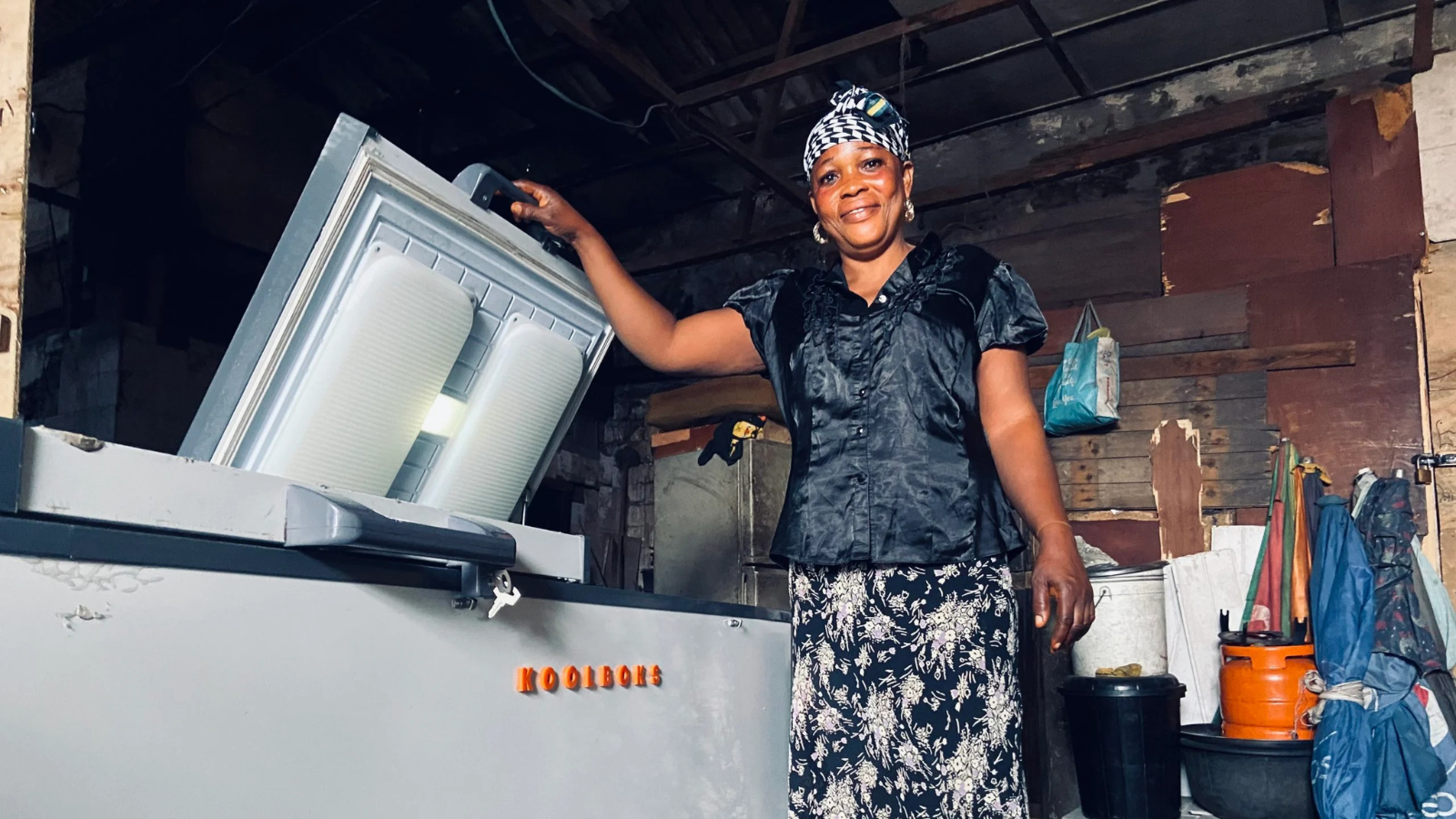
Koolboks is scaling solar-powered cold-chain infrastructure across Africa and beyond, helping improve access to reliable refrigeration in communities where traditional cold storage is expensive, unreliable, or unavailable.
In 2025, the company achieved its highest sales to date while expanding operations across Nigeria, Kenya, Uganda, France, and 21 additional countries. Beyond commercial growth, Koolboks’ impact spans food security, healthcare access, climate resilience, and economic opportunity. Its solutions help reduce spoilage and operating costs while supporting women-led enterprises and creating income and skills opportunities for young people.
Koolboks has also raised more than $18M in funding to support its continued expansion and innovation across Africa.