Independent enterprise designed to help Nigerian SMEs access larger, longer-term loans
14 October, Lagos, Nigeria: Cascador and Sterling Bank have announced a $200 million SME Credit Backstop Fund, an independent platform designed to expand access to growth capital for debt-ready Nigerian SMEs. The fund will provide a defined credit-risk backstop to participating finance partners, with the model supporting up to $1 billion in outstanding credit capacity.
The initiative follows the publication of Cascador’s white paper, The Multiplier Model, which examines the constraints limiting African businesses’ ability to scale and the importance of matching capital to each business’s needs and maturity. Across Sub-Saharan Africa, businesses finance a greater share of investment through equity than the global norm, reflecting the limited availability of debt as a suitable source of growth capital. Only 22% of businesses in the region hold a bank loan or line of credit, compared with a global average of 36%. The SME Credit Backstop Fund responds to this gap by creating a structured route to larger, longer-term loans for businesses that are ready to borrow but face barriers to accessing debt.
“Nigeria is rich in entrepreneurial talent and innovation and yet their potential is constrained by lack of access to capital that matches where they are and what they are trying to achieve,” said Trish Thomas, CEO of Cascador. “The SME Credit Backstop Fund aims to transform potential into a reality by bringing the experience and capital of the ecosystem to create a practical route to debt for Nigerian businesses with proven traction. By sharing risk with lenders, and translating community trust into a bankable signal to lend, the fund can help more businesses access what they need to scale and create jobs.”
Cascador brings experience identifying, supporting, and investing in businesses with the potential to scale, while Sterling Bank contributes lending infrastructure and credit-market expertise. The fund will also bring together SME ecosystem partners, finance partners, and backstop capital providers, such as philanthropic funders, impact investors, and development-finance institutions within a single risk-sharing model, helping to support the guarantee reserve and mobilise additional SME lending.
“At Sterling, the strength of this partnership lies in how it addresses lending risk across the entire financing journey,” said Obinna Ukachukwu, Group Executive, Sterling Bank. “Alongside the additional protection of the credit backstop, the initiative brings together businesses recommended by participating venture funds and studios that know these enterprises and have supported their development. This combines a stronger borrower pipeline with structured assessment and ongoing monitoring, giving us greater confidence to provide larger, longer-term loans. As a lending partner, we see the potential for this arrangement to bolster SME lending, helping proven businesses access the capital they need to scale.”
Sterling Bank is an innovation-led financial institution guided by a belief in impact capitalism, deploying capital to deliver commercial returns while improving lives and expanding opportunity. Its focus on the HEART sectors – Health, Education, Agriculture, Renewable Energy and Transportation – reflects its commitment to helping solve Nigeria’s most critical problems and enabling Nigerian businesses to thrive. The partnership advances Sterling’s belief that Nigeria’s growth capital should be orchestrated locally, informed by the country’s realities, and designed to solve its problems.
For SMEs, the model is intended to provide a route to larger, longer-tenor growth capital with reduced collateral and guarantee burden. For finance partners, it offers access to a pipeline of debt-ready businesses alongside structured risk sharing, while for ecosystem partners, it creates a financing route for proven businesses that have progressed beyond early-stage support and are ready for commercial debt.
The model works across four parts of the financing chain:
SME ecosystem partners identify and nominate businesses that meet the fund’s debt-readiness standards.
The fund applies its own eligibility, guarantee and portfolio-risk standards utilizing AI-powered underwriting and due diligence. For approved borrowers, the fund provides a defined backstop against losses.
Finance partners independently assess borrowers, approve and disburse loans, and retain responsibility for servicing, monitoring and collections.
SMEs can initially access local currency loans equivalent to $250,000, with longer-term financing aligned to business cash flows and subject to lender approval. The fund aims to unlock loan sizes of up to $1,000,000 once fully funded.
Iyinoluwa Aboyeji, Founding Partner of Future Africa, said, “Over the last 12 years, Future Africa has provided early-stage funding to over 100 companies, including a third of the continent’s unicorns. Those early bets have taught us one thing: the future cannot be sustainably built on one layer of the capital stack. Equity must work with debt and long-term securities to provide builders with the capital they need to build the future. This is why we are so excited about the SME Credit Backstop Fund, and how it will enable more Nigerian businesses to access financing for the productive assets they need to create jobs.”
The fund will operate through Riverwell Platform Holding Limited, a UK-owned technology-enabled SME infrastructure platform and Riverwell Platform Services Nigeria, with reserve capital held separately. The Nigerian operating company will oversee partner coordination, business-readiness, assessment, data collection, portfolio monitoring and reporting, while the reserve company holds and manages the capital supporting the backstop.
Ukachukwu will also serve as a director on the Riverwell platform, bringing Sterling’s banking expertise to guide financing structures, credit-risk oversight and portfolio monitoring. Modeled upon the Catalytic Fund structure piloted over the past 2 years by Cascador (as nominator and guarantor) and Sterling (as lender), the new fund will be independently managed to ensure sustainability and discipline while allowing participation from a range of ecosystem partners.
The SME Credit Backstop Fund builds on Cascador’s work as one of Africa’s most active investors, and as a platform that unlocks the potential of Nigeria’s most transformative entrepreneurs. Since 2019, Cascador has supported 80 ventures that have collectively raised over $150 million in capital. In 2025 alone, Cascador’s alumni delivered essential products and services to more than 1.7 million customers and directly employed almost 4,000 people.
The Multiplier Model whitepaper is available to download here.
– ENDS –
About Cascador
Cascador is a Nigeria-focused platform for growth-stage founders building businesses that make an impact. Through Cascador ScaleUp, its flagship program, Cascador works with an elite cohort of entrepreneurs to strengthen their leadership and sharpen their strategy, preparing them to scale successfully. ScaleUp alumni gain exclusive access to the Catalytic Fund, which deploys up to $5M USD in capital annually through a blend of debt and equity investments. Since 2019, Cascador has supported 80 companies that have collectively raised over $150 million. Today, alumni are driving innovation, creating jobs, raising investment capital, winning awards, and changing the face of the African economy. Learn more at www.cascador.org
About Sterling Bank
Sterling Bank Limited is a full-service national commercial bank in Nigeria and a member of Sterling Financial Holdings Group. With a heritage of more than 60 years, the bank has evolved from Nigeria’s pre-eminent investment banking institution to a trusted provider of retail, commercial, and corporate banking services.
Sterling is a forward-thinking financial institution committed to transforming lives through innovative solutions, exceptional service, unwavering integrity, and a steadfast focus on its HEART strategy, which centers on Health, Education, Agriculture, Renewable Energy, and Transportation. As pioneers in digital banking and financial inclusion, Sterling continues to lead by example, showing how purpose-driven leadership can deliver transformative outcomes for individuals, businesses, and society at large.
Guided by a culture of innovation and a passion for excellence, Sterling Bank remains dedicated to redefining the banking experience for millions of customers across Nigeria.
The Lagos-based accelerator, Cascador, in collaboration with Nigerian commercial bank Sterling Bank, has launched a $200 million SME Credit Backstop Fund to help Nigerian small businesses get larger, longer loans.
The fund will share credit risk with lenders. Cascador says the model can support up to $1 billion in outstanding credit capacity.
It targets debt-ready businesses that are struggling to access debt. They can first get local currency loans worth $250,000, and the fund aims to unlock loans of up to $1 million once it is fully funded.
“By sharing risk with lenders and translating community trust into a bankable signal to lend, the fund can help more businesses access what they need to scale and create jobs,” said Trish Thomas, CEO of Cascador.
The backstop capital is meant to come from philanthropic funders, impact investors and development finance institutions.
The launch follows Cascador’s white paper, The Multiplier Model. Cascador says only 22% of businesses in Sub-Saharan Africa hold a bank loan or credit line below the global average of 36%.
Obinna Ukachukwu, Group Executive at Sterling Bank, said the fund brings together businesses recommended by venture funds and studios that know them.
“This combines a stronger borrower pipeline with structured assessment and ongoing monitoring, giving us greater confidence to provide larger, longer-term loans,” he said.
The fund will run through Riverwell Platform Holding Limited, which Cascador describes as UK-owned, and Riverwell Platform Services Nigeria. The reserve capital will be held separately. Ukachukwu will serve as a director on the Riverwell platform.
The model builds on the Catalytic Fund that Cascador and Sterling piloted. Cascador says it has supported 80 ventures since 2019 and that it has raised over $150 million.
Cascador, a Nigeria-focused platform for growth-stage founders, and Sterling Bank, a mid-size Nigerian commercial bank, have set up a $200 million fund to help small Nigerian businesses and startups get bank loans by sharing the risk of borrowers defaulting.
The partners say the SME Credit Backstop can back up to $1 billion in loans at a time. Rather than directly lending to the businesses, it will guarantee part of the bank’s potential losses if a borrower defaults, making it easier for lenders to extend credit to companies they might otherwise consider risky.
The fund will consider businesses nominated by venture capital firms and studios that already back them. It will use AI-powered underwriting to check whether the business is ready to take on debt. If it approves the business, the fund agrees to cover part of the bank’s loss if that loan goes bad.
The fund targets a persistent obstacle for most Nigerian startups: access to debt. About one in five Nigerian businesses had a bank loan or line of credit in 2025, compared with 22% across Sub-Saharan Africa and 36% globally, according to World Bank Enterprise Survey data. Banks often consider small businesses and startups as risky and demand collateral that many cannot provide.
“By sharing risk with lenders and translating community trust into a bankable signal to lend, the fund can help more businesses access what they need to scale and create jobs,” said Trish Thomas, Cascador’s CEO, in a statement shared with TechCabal.
Sterling will decide whether to lend after conducting its own checks. The bank will disburse approved loans, collect repayments and pursue borrowers who default. The backstop is intended to reduce the bank’s exposure, not eliminate it.
Obinna Ukachukwu, a group executive at Sterling Bank, said the backstop, combined with borrowers recommended by funds that already know them, gives the bank “greater confidence to provide larger, longer-term loans.”
Borrowers can start with local-currency loans worth up to $250,000, and the fund plans to raise that to $1 million.
The partners expect to raise the backstop capital from philanthropic funders, impact investors and development finance institutions. The $200 million is therefore the fund’s stated size, while the $1 billion figure represents the lending capacity it aims to support.
“The future cannot be sustainably built on one layer of the capital stack,” said Iyinoluwa Aboyeji, founding partner of Future Africa, in the statement. “Equity must work with debt and long-term securities to provide builders with the capital they need to build the future.”
Without access to loans, startups must rely more heavily on equity financing to expand, giving investors ownership stakes in exchange for capital. But venture funding has become harder to secure. Only 190 African startups raised $100,000 or more in the first half of 2026, the lowest number since at least 2021. Companies unable to borrow either give up more ownership and control at the early stage or grow slowly.
Debt has become a larger part of African startup financing, although it remains concentrated among a relatively small group of companies. Startups on the continent borrowed a record $1.64 billion in 2025, and debt made up 41% of all their funding, up from 17% in 2019. TechCabal Insights tracked another $614 million in startup debt in the first half of 2026, about 43% of all funding. Over five years, 169 African startups announced debt deals, against nearly 1,900 that raised equity.
The new fund is designed to widen access by letting lenders share the risk of lending to businesses with revenue and existing investors willing to vouch for them. The move also builds on an earlier partnership between Cascador and Sterling. In 2025, they partnered on a $2 million catalytic fund that gave Cascador alumni debt at interest rates around 20%, with much lower collateral requirements. At its June 2026 Pitch Day, the fund handed out more than $5 million, including a ₦2.5 billion ($1.7 million) debt facility to Agriarche, an agritech startup.
The new fund expands that model beyond Cascador’s alumni. Under the earlier arrangement, Cascador nominated and guaranteed borrowers while Sterling provided the loans. The SME Credit Backstop Fund will also accept nominations from other venture capital firms and startup studios.
The fund will operate through Riverwell Platform Holding Limited, a UK-owned company, and Riverwell Platform Services Nigeria, a Nigerian operating company. The Nigerian company will handle partner coordination, borrower assessment, data collection, and portfolio monitoring. A separate reserve company will hold the backstop capital. Ukachukwu will serve as a director on the Riverwell platform.
True scale demands moving beyond surface-level integrations to robust execution. We’ve filtered the noise out of Moonshot 2026, optimising the conference strictly for high-calibre connections between startup founders, global financial operators, enterprise leaders and individuals rewiring Africa’s technical frameworks.
Building Bridges 2026 is a three-day sustainable finance summit in Geneva convening financial, public, and international leaders around investable sustainability solutions.
The investment supports the company’s next phase of growth while demonstrating TLG’s innovative approach to financing high-quality African businesses, with Cascador playing a key role in structuring the transaction.
9 September, 2026, Lagos – TLG Capital, a leading private credit firm operating across Sub-Saharan Africa, has closed a US$3,000,000 senior debt facility for Drive45 Mobility Limited (“Drive45”), a Lagos-based transportation company providing mobility solutions to international and local businesses across Nigeria. The investment strengthens Drive45’s balance sheet and positions the company for its next phase of growth as demand for mobility services continues to increase across the country.
Founded in 2021, Drive45 has built a focused business aimed at closing Nigeria’s mobility gap, giving international and local businesses access to reliable transportation without the capital burden of vehicle ownership. Today, the company operates more than 170 active vehicles and has recorded no payment defaults in five years of operation.
The facility will support Drive45’s continued expansion, enabling the company to deploy more capital into fleet growth, broaden its customer base, and deepen its presence across Nigeria. In the coming years, it aims to increase its footprint to Port Harcourt, Abuja, Kano, Kaduna and other major business hubs across Nigeria.
The transaction combines TLG’s flexible private credit with a guarantee provided by Cascador, delivered in partnership with Morgan Stanley. Through this innovative partnership, high-growth African businesses like Drive45 can access the institutional capital suited to their growth. Cascador has delivered financial and non-financial resources to the company since Drive45 completed Cascador’s ScaleUp programme in 2024, and this transaction sees Cascador extend that support, this time through a creative financing mechanism.
Isha Doshi, Co-Founder and Partner at TLG Capital, said:
“Drive45 is a prime example of disciplined capital deployment to meet a clear market need. Oluwaseyi and his team have a very clear vision for what mobility can look like in Nigeria’s business community – and they have built a fantastic business around it. TLG is proud to support Drive45 in its expansion journey. This transaction also would not have been possible without Cascador. It’s easy to see how they’ve built an exceptional track record in Nigeria: they combine seasoned experience in the market with a relentless bias towards action. This is exactly the type of partner we look to grow with.”
Oluwaseyi Adefemi, CEO of Drive45, said:
“Mobility access is a capital business, so having the right financial backing is everything. TLG has been a thoughtful partner from day one. They took the time to understand how our business works and structured their capital to fit the growth trajectory we know is possible. Ultimately, their money goes directly towards our plans to reach more businesses across Nigeria. Just as important has been Cascador. They believed in Drive45 from our earliest days, gave us the tools and network to become investment-ready, and have worked alongside us every step of the way to help structure this financing. We’re grateful to have them as long-term partners as we keep scaling,”
Trish Thomas, CEO of Cascador, said:
“So many investors focus on getting capital out the door without thinking about setting companies up for long-term viability. TLG is an exception: not only are they commercially-minded, but they have a unique drive to get things done with speed, imagination, and excellence. Funders looking for true economic impact in Africa should look to TLG as an execution-focused financing partner. This partnership is perfect for a company like Drive45. Oluwaseyi and his team have built a business with real corporate demand and the integrity to match it. That’s exactly what Cascador exists to find, and it’s been a privilege watching them grow into a business ready for commercial capital. We’re thrilled to have played a part in getting them here, and we’re always looking for opportunities to elevate high-performing founders leading sustainable, impactful companies.”
TLG will continue to work closely with Drive45 following the investment through its value creation framework, partnering with management to strengthen governance, ESG monitoring, operational performance and strategic growth initiatives as the business continues to scale.
The Drive45 team was led by Oluwaseyi Adefemi. The TLG Capital deal team comprised Aum Thacker and Rohan Subramanian. Legal counsel for the transaction were Simon Harter, Hannaford Turner, and Wigwe and Partners. Cascador supported the transaction as guarantor and Drive45’s accelerator partner.
About TLG Capital
TLG Capital is a leading private credit fund manager exclusively focused on sub-Saharan Africa. TLG has made 50+ investments and 30+ exits across 20+ African countries since its inception in 2012. TLG’s flagship fund, Africa Growth Impact Fund II (AGIF II), targets small-and-medium enterprises and is anchored by the IFC, Norfund, Swedfund, and Bpifrance. TLG is trusted by more than 100 institutional and individual investors across North America, Europe, Asia, and Africa. For more information, visit www.tlgcapital.com.
About Drive45
Drive45 Mobility is a Nigerian mobility company transforming access to vehicle ownership through a flexible rent-to-own vehicle subscription model. We enable individuals and businesses to access vehicles with manageable payments and minimal upfront capital. Our offering combines vehicle financing with insurance, maintenance, tracking, documentation, and fleet management. Drive45 is building a scalable pathway to affordable mobility and vehicle ownership across Africa. Learn more at www.drive45mobility.com.
About Cascador
Cascador is a Nigeria-focused platform for growth-stage founders, powered by the Empowering Economic Growth Foundation (EEGF), a US-based private operating foundation dedicated to strengthening Africa’s entrepreneurial ecosystem. Since launching in 2019, Cascador has supported more than 70 ventures, which have collectively raised over $125 million in capital and created tens of thousands of jobs. Through its ScaleUp Programme and Catalytic Fund, a $5+ million annual financing vehicle launched 2025, Cascador equips growth-stage founders with mentorship, strategic advisory support, and access to debt, equity and credit guarantees. Learn more and apply at www.cascador.org.
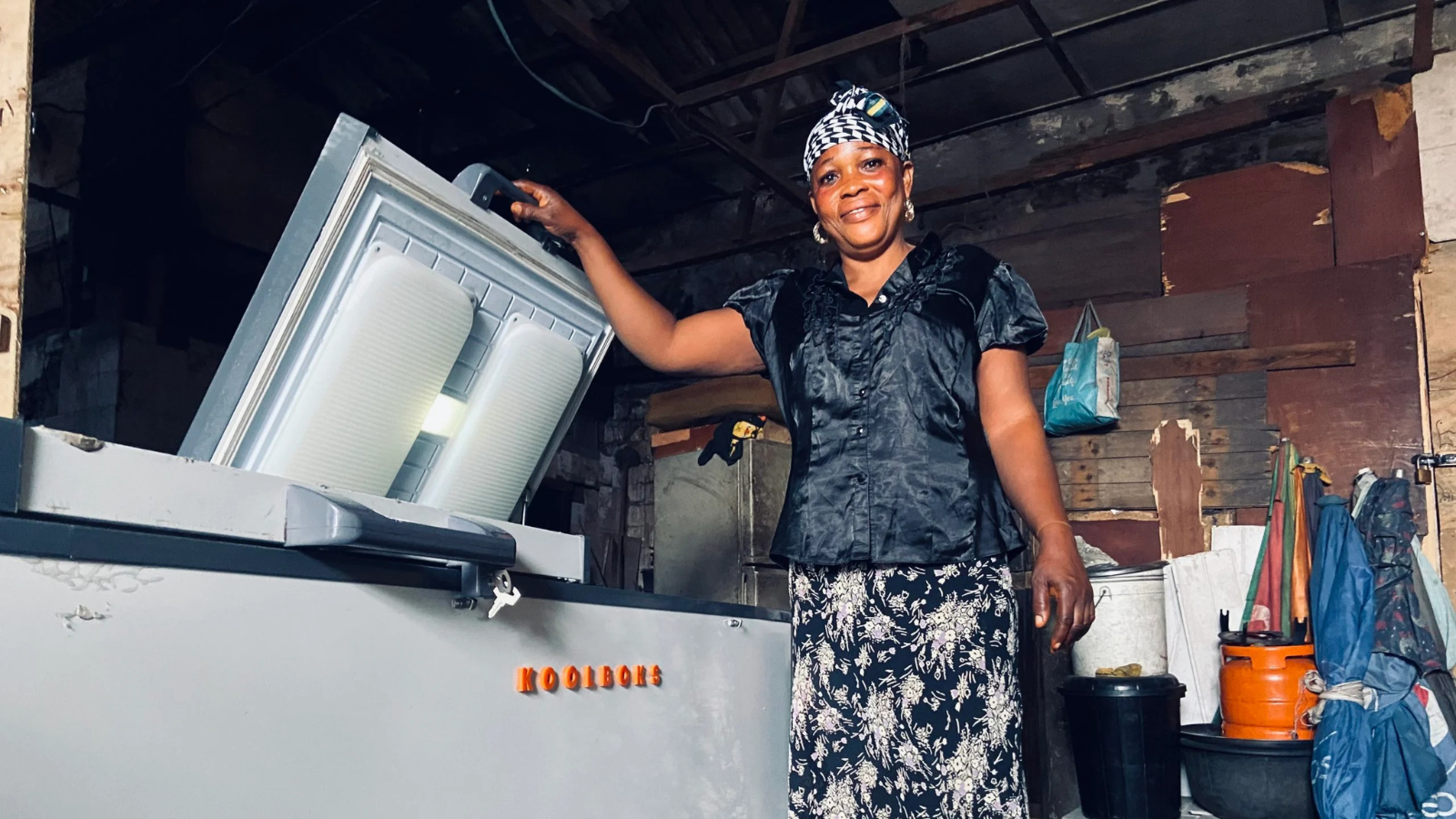
Koolboks is scaling solar-powered cold-chain infrastructure across Africa and beyond, helping improve access to reliable refrigeration in communities where traditional cold storage is expensive, unreliable, or unavailable.
In 2025, the company achieved its highest sales to date while expanding operations across Nigeria, Kenya, Uganda, France, and 21 additional countries. Beyond commercial growth, Koolboks’ impact spans food security, healthcare access, climate resilience, and economic opportunity. Its solutions help reduce spoilage and operating costs while supporting women-led enterprises and creating income and skills opportunities for young people.
Koolboks has also raised more than $18M in funding to support its continued expansion and innovation across Africa.